
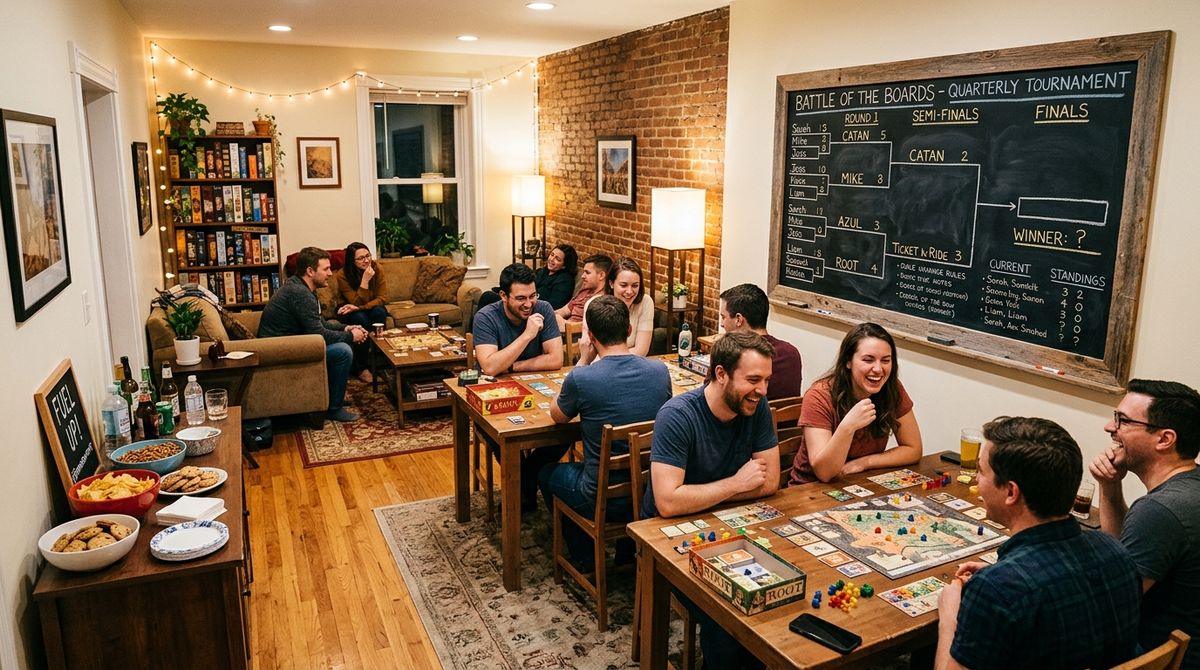
A board game night can turn a quiet living room into a lively meeting place. Neighbors who rarely speak on the sidewalk often discover shared interests once they sit around the same table. The format is simple, the cost is modest and the conversation tends to flow without much planning.
The appeal goes beyond entertainment. Games give people a shared task, a set of clear rules and a reason to laugh together. Those qualities make them useful for small towns, apartment buildings, libraries and community centers alike.
Choosing Games That Welcome Everyone
A good starter game should be easy to learn in a few minutes. Look for titles with short rulebooks, clear turn order and components that are sturdy enough for a crowded table. Mix a few lighthearted choices with one strategy game for players who enjoy a longer challenge. Keep a small selection rather than a huge library, so that the group can decide quickly and spend more time playing. Simple classics, such as cooperative puzzles and light trading games, often win over people who think they do not enjoy board games.
Readers may also want to visit thisisukbusiness.com. Those lists make it easier to plan ahead for guests who may be new to the hobby. Always check the box for the recommended age range before inviting younger players.
Making the Space Comfortable
The room does not need to be elaborate, but it should feel easy to enter. Clear a central table, provide enough chairs and set out a few snacks that do not require utensils. Good lighting matters more than decoration, because players need to read cards and small pieces. A spare table for drinks or a quiet corner for conversation gives people a place to step away. You can also visit biz-kubo.net for more reading. Keep a basket for coats and bags near the door so that the table stays clear for play.
Think about accessibility as well. Tables should be wide enough for wheelchairs, and seating should include some options with arms and back support. Large print rule cards and tactile game pieces can help players with low vision join the fun without feeling singled out. Rotating the host role among regular attendees keeps the event feeling shared.
Inviting Neighbors Without Pressure
Invitations work best when they are specific. A short note that names the game, the start time and the snack plan makes the event feel manageable. Post a friendly sign at a shared mailbox or community board, and welcome people who arrive alone, since many attendees will come to meet others. Explain that no experience is needed, which removes the fear of looking foolish. Send a short text reminder on the morning of the event, since a brief message is often the nudge that gets a busy neighbor to attend. For a related read on this site, see Setting Up a Shared Family Calendar Without Losing.
Hosts should also avoid pressuring anyone to stay for the whole evening. Some guests will prefer one or two games before heading home, and that choice is perfectly fine. A relaxed exit keeps the door open for the next gathering. Invite a guest to bring a game of their own, and give them a few minutes to explain it before the group starts. Hearing a favorite game explained by its owner often sparks lively conversation.
Keeping the Game Moving
Every table has at least one player who wants to analyze each move for twenty minutes. Gentle timers, a rule that players choose their turns quickly and a willingness to switch games help keep the energy high. A visible timer on a phone works well, and a soft chime tells players when to wrap up a turn without anyone feeling rushed. Teach the rules once at the start, then let the group learn by playing. Pause for a short break after a long round so people can refill drinks and talk.
Shared responsibility builds ownership, and it prevents one person from carrying the entire evening. Rotate the game selection too, so every member can introduce a favorite title.
Turning One Evening Into a Habit
Regular game nights often grow from a single successful gathering. Choose a fixed time each month, keep the format predictable and send a reminder a few days ahead. Ask guests to suggest one game they would like to try next time, and write those ideas on a shared list. Over time, the group develops its own traditions, inside jokes and small rituals that make newcomers feel welcome. Keep a small notebook by the door for names and contact details, so that the next invitation reaches everyone who showed up.
A monthly game night is a modest commitment with large social returns. It gives neighbors a dependable reason to talk, laugh and look out for one another. The table itself becomes the meeting point, and the friendships formed there often extend far beyond the last card drawn. Many communities also host a seasonal tournament, which gives regulars a goal to work toward.