
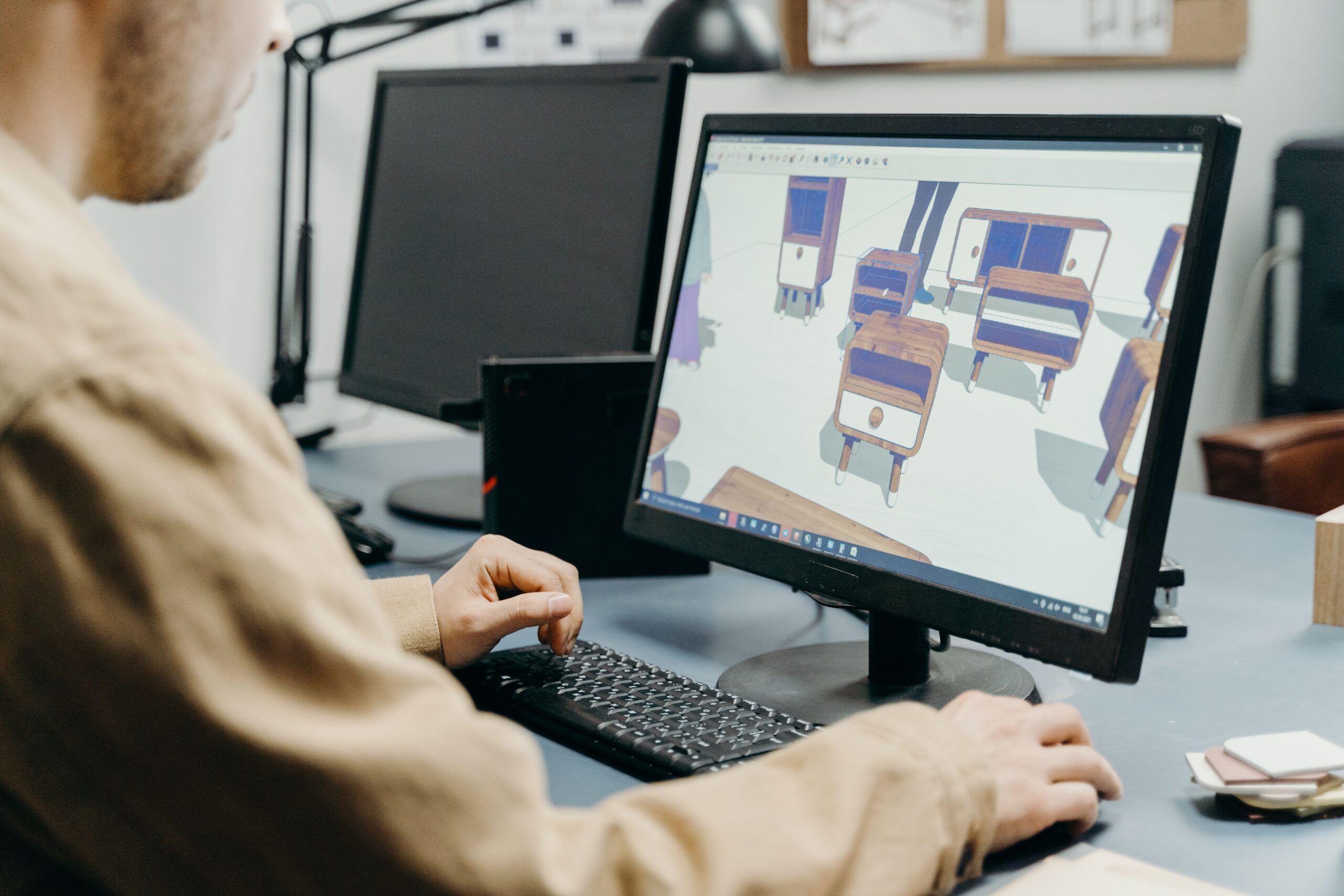

The bench in the garage is losing ground to the screen. A growing share of independent inventors now move from idea to a pitch ready product using computer aided design, photorealistic renderings, and digital animation rather than a bin of foam, glue, and hand tools. The reason is practical. A CAD model shows a manufacturer exactly what a product is, in less time and at lower cost than a hand built version, and a designer can revise it in an afternoon instead of rebuilding it over a weekend.
What “going virtual” actually means
For decades the mental image of inventing involved a person hunched over a workbench, filing down a physical model until it looked right. That image still sells television, but it no longer matches how most consumer products reach a licensing conversation. The core deliverable has shifted to a virtual prototype package: a CAD model that captures dimensions and mechanics, a set of renderings that show the product as it would look on a shelf, and sometimes a short animation that shows how it works.
The change is not cosmetic. A physical model answers one question, which is whether a specific version feels right in the hand. A CAD file answers many. It can be measured, stress checked, handed to a factory for a quote, and dropped into a sell sheet without a photographer. Firms that build products for a living have noticed. Enhance Innovations, a product development company founded in 2010 and based in Champlin, Minnesota, keeps design, engineering, marketing, and licensing under one roof and treats digital renderings and CAD as the standard first deliverable, with physical models scoped only when a specific project calls for one.
Why the numbers point the same direction
The volume of invention activity is not slowing. The United States Patent and Trademark Office reports that it receives more than 600,000 patent applications a year, a level that has held for over a decade. Filing that many applications while hand building that many prototypes would be impossible on independent budgets. Digital tools absorbed the gap. When a provisional application can be paired with a rendering set instead of a machined sample, the cost of getting to a credible pitch drops enough that more people try.
Small operators drive a real portion of this. The Small Business Administration’s Office of Advocacy has documented that small firms produce a disproportionate share of the country’s patented innovation relative to their size. Those firms rarely own fabrication equipment. They rent design and engineering time, and increasingly that time is spent in software.
The manufacturer’s point of view
Companies that license outside inventions think in files, not in foam. A licensing manager reviewing dozens of submissions wants dimensions, materials, and a clear visual, all of which travel better as a CAD package and a rendering than as a fragile physical sample shipped across the country. University technology transfer offices, which license research inventions to industry, work the same way. The Association of University Technology Managers describes a pipeline built on documentation and disclosure, where the artifact that moves a deal forward is information, not an object.
What the inventor gains and gives up
The gain is speed and reach. A virtual package can be emailed to ten potential partners in an hour. Revisions cost design time, not raw materials. The give up is the tactile check. A rendering cannot tell an inventor whether a grip is comfortable or whether a hinge feels cheap, so some products still need a physical looks like or works like model at a later stage. The point is sequence. Virtual first, physical when a specific question demands it, rather than physical first out of habit.
That sequence also protects budgets. Building a tooled physical prototype before a patent search or a market check can commit thousands of dollars to a design that changes anyway. Running the search, filing a provisional, and producing renderings first keeps the early spend proportional to what has actually been validated.
The garage is not gone, just repositioned
None of this means the hands on inventor disappears. Makers still sketch, tinker, and test at home, and 3D printing has made cheap physical models easier than ever. What has changed is where the decisive work happens. The document that gets an invention licensed, quoted, or protected now lives on a drive rather than a shelf. For inventors weighing where to spend first, the shift is a useful signal: the market rewards a clear digital picture of a product long before it rewards a hand built one.