
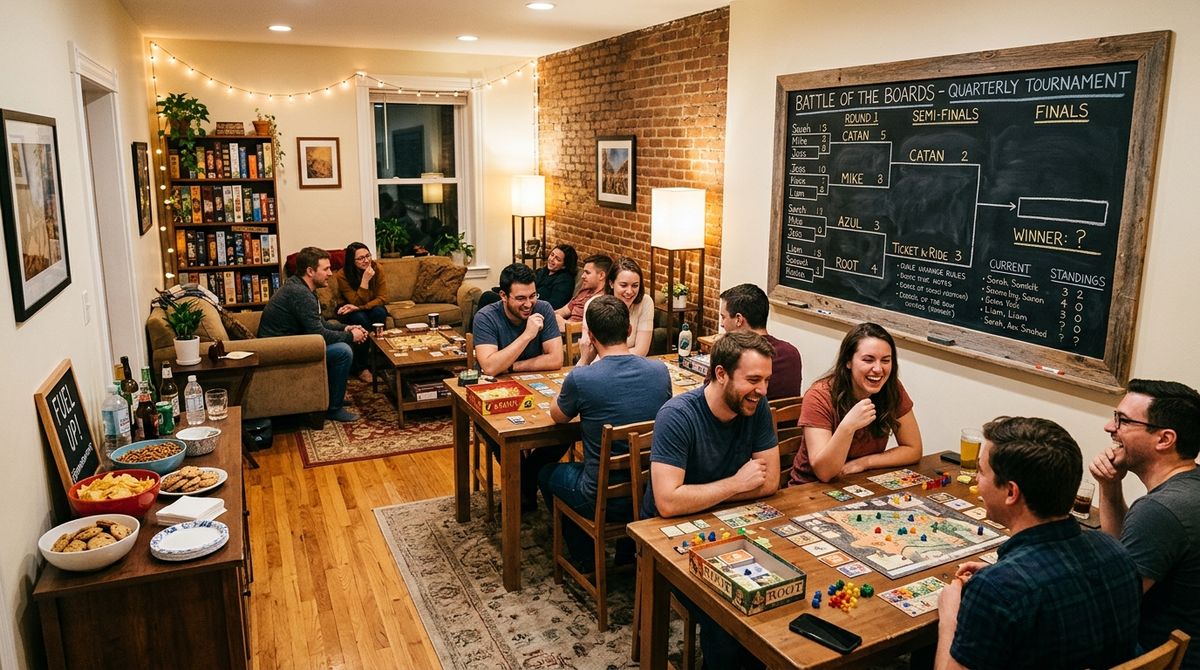
Office retreats often start with a hotel conference room, a projector and a schedule that fills every hour. Staff sit through presentations, nod politely and return to their desks with little sense of having spent time together. A smaller alternative can work better for a small team: an evening around a table with a few board games chosen for conversation rather than competition. The setting is relaxed, the cost stays modest and the people in the room often talk more freely than they do in meetings.
The idea suits businesses with small groups, where most staff already know each other on a professional level but rarely share a relaxed moment. A board game night does not replace strategic planning. It gives the team a chance to build trust, notice how colleagues think under light pressure and enjoy each other’s company without the usual agenda.
Picking Games That Invite Talk
Not every game suits a workplace. Titles with long rules, heavy strategy or aggressive elimination can leave some people feeling left out. Cooperative games, where everyone works toward a shared goal, often create better conversation because players must discuss options together. Party-style word or drawing games also work well for mixed groups, since they lower the stakes and give quieter staff an easy way to contribute.
The mix of games matters as much as the choice of any single title. Plan two or three options so the group can switch if one game feels slow or the energy drops. Keep rule explanations short, and assign one person to teach each game in a few minutes. Readers may also want to visit getnewsupdate.net.
Setting the Room and Ground Rules
The room should feel comfortable rather than formal. Soft lighting, a steady supply of drinks and a clear table large enough for every player make a difference. Ask the team to leave laptops and phones in another room for the evening, unless someone needs an urgent call. A short note in the invitation explaining that the event is optional and social helps reduce anxiety for people who prefer not to attend.
Ground rules are simple but important. You can also visit Pedro Vaz Paulo for more reading. Work topics should be off limits unless someone chooses to raise them, and jokes at a colleague’s expense should be avoided. Give each player permission to pass a turn or step away for a few minutes. Clear expectations protect the evening from becoming another meeting in disguise and let everyone relax into the games.
Sharing the Planning Load
Rotating the host works best when each person has a clear role. One colleague can choose the games, another can handle snacks and a third can keep track of the time. Splitting these tasks keeps the effort light and gives quieter teammates a comfortable way to contribute. A shared note listing the jobs makes the arrangement easy to follow.
Some planners gather ideas from outside sources before each session. For a related read on this site, see When Crypto Reaches the Vape Counter. Anything that reduces preparation time makes it more likely that the evening will happen again.
Turning the Evening Into a Useful Debrief
A short debrief after the games can help the team remember what they learned about each other. Ask two or three open questions, such as which game surprised them, how the group decided to split tasks or what they noticed about someone’s approach. Keep the conversation light and avoid evaluating individual performance. The goal is to notice patterns in teamwork that can be useful during the next project.
Some managers use the evening to gather ideas for the coming months. A simple sticky note exercise, where each person writes one thing they would like the team to try, can produce practical suggestions without the pressure of a formal workshop. Collecting the notes and sharing the results the following week shows that the input was heard and taken seriously.
Making the Tradition Last
One successful evening is pleasant, but a repeated habit builds real connection. Scheduling the games on a regular quarter or season gives the team something to look forward to, and rotating the host spreads the effort across the group. Some teams keep a shared list of games they enjoyed, which makes planning the next session easier. Small rituals, like a shared snack or a closing toast, can make each evening feel special. Over time, the table becomes a place where colleagues know each other as people, not only as job titles.